Painting with Storefront Light: A Cinematic Night Shoot in Geneva
Shooting portraits at night without artificial flash is one of photography’s greatest technical hurdles. Here is how we turned a shop window on Geneva's Rue de l'Arquebuse into a giant softbox, crafting organic, filmic portraits with medium-format depth.
“I’m very happy with the photos Pierre-Alexandre took of me in Geneva. The lifestyle photos in different fits are exactly what I wanted. They have a cinematic look and style that I will treasure forever. I definitely recommend Pierre-Alexandre for any photoshoot.”
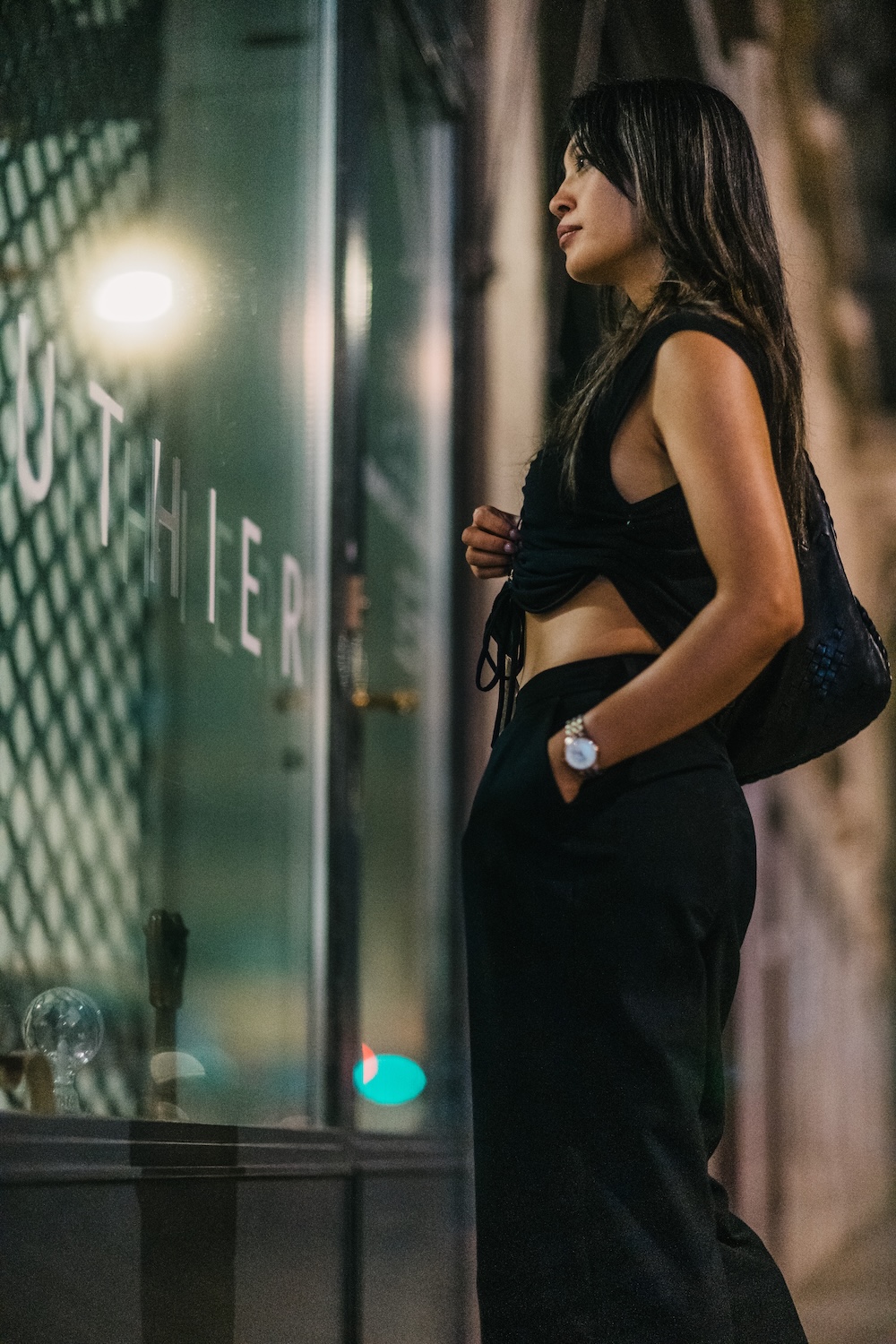
The Vision: Stepping Beyond the Daylight Comfort Zone
When my client approached me for a portrait session in Geneva, she expressed a clear desire: she wanted something radically different from the standard daytime golden-hour shots in her collection. She envisioned night portraits filled with atmosphere, mood, and urban elegance.
However, shooting outdoors at night presents severe technical challenges, especially when adhering to my core philosophy: no intrusive artificial flash, no heavy studio setups, and no forced posing. The goal was to maintain an authentic film aesthetic using purely available ambient light.
The Technical Obstacle of Night Lighting: Standard municipal streetlamps emit harsh, directional light from directly overhead. In portraiture, top-down street lighting creates unflattering dark shadows under the eyes ("raccoon eyes") and steep nose shadows, draining the softness from facial features.
Finding the Light: Rue de l'Arquebuse, Geneva
To overcome top-down street lighting without firing a strobe, you must scout for secondary light sources positioned at eye level. While walking down Rue de l'Arquebuse in Geneva, we found our ideal setup right outside a traditional luthier workshop (violin maker).
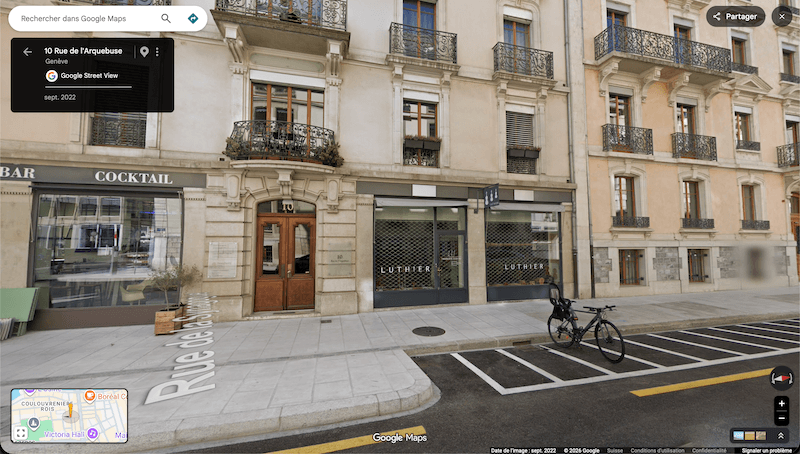
The large glass window of the workshop served as a magnificent, broad light source. By placing the client close to the glass, the interior illumination acted exactly like a large studio softbox. It wrapped around her face with soft, lateral light, filling in harsh shadows and creating expressive catchlights in her eyes.
Optics & Technical Setup
Camera Body: Sony Alpha 7 III
Prime Lens: Canon EF 85mm f/1.2L II USM (via Sigma MC-11 Adapter)
Optical Diffusion: 1/4 Black Mist Filter
Lighting Strategy: 100% Ambient Storefront Light (Zero Flash)
Creating the Medium-Format & Auteur Film Aesthetic
To give these night portraits an unmistakable cinematic depth, equipment choice played a crucial role. I selected the legendary Canon EF 85mm f/1.2L II USM wide open at f/1.2. At this extreme aperture, the lens produces a physical rendering remarkably close to medium-format cameras.
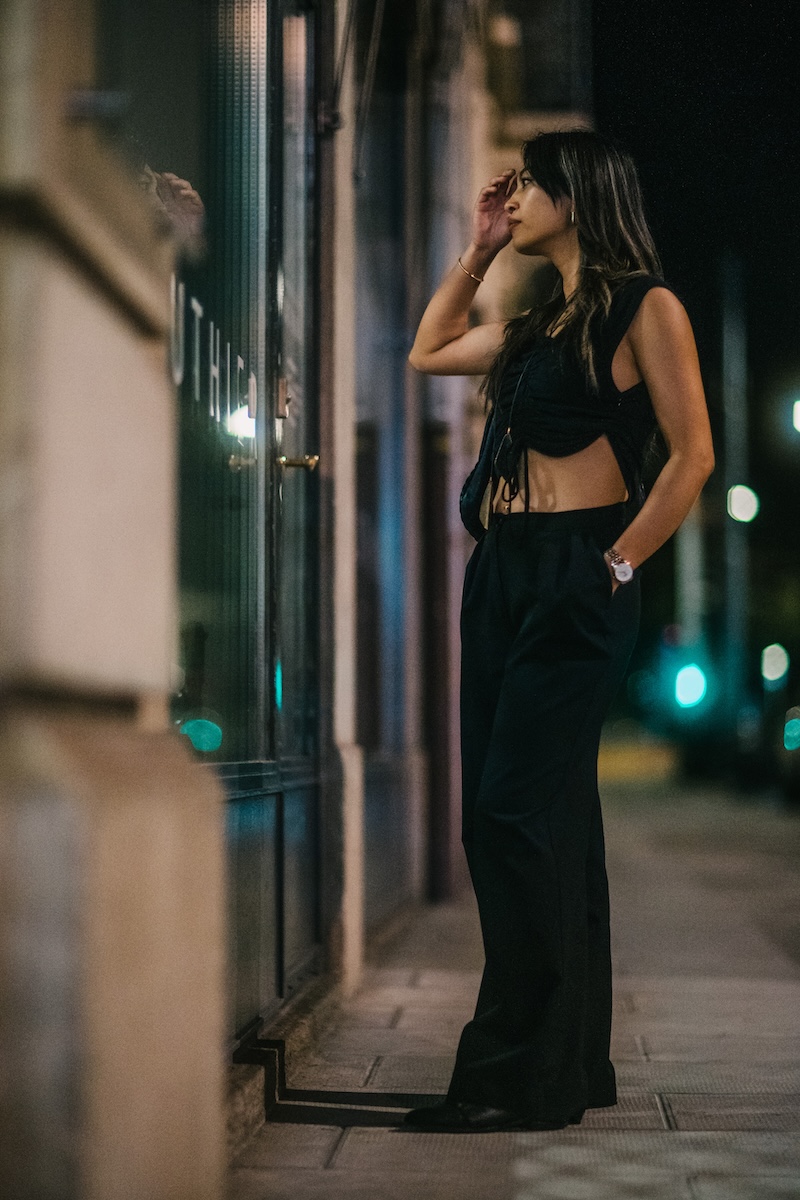
1. Three-Dimensional Depth & Separation
By shooting through glass angles at f/1.2, we establish three distinct visual layers:
- Foreground: Soft, dreamy reflections of window typography ("LUTHIER") and warm interior light.
- Midground: The subject rendered razor-sharp with gentle micro-contrast along the eyes and profile.
- Background: Distant Geneva streetlights transformed into soft, creamy circular bokeh balls.
The transition between these planes is smooth and gradual, avoiding the clinical, overly digital look of modern sharp lenses.
2. Taming Digital Specular Light: The 1/4 Black Mist Filter
Digital sensors often handle night urban lighting harshly, creating sharp clipped highlights around streetlamps. Screwing a 1/4 Black Mist filter onto the 85mm lens alters light propagation in three subtle ways:
- Highlight Halation: It causes specular lights (like the shop bulbs and traffic signals) to bloom softly, generating a subtle vintage halo.
- Contrast Roll-off: It slightly lowers global contrast in dark shadow areas without lifting black levels artificially.
- Skin Texture Softening: It retains full resolution while softening skin micro-textures, delivering a true auteur film aesthetic straight out of camera.
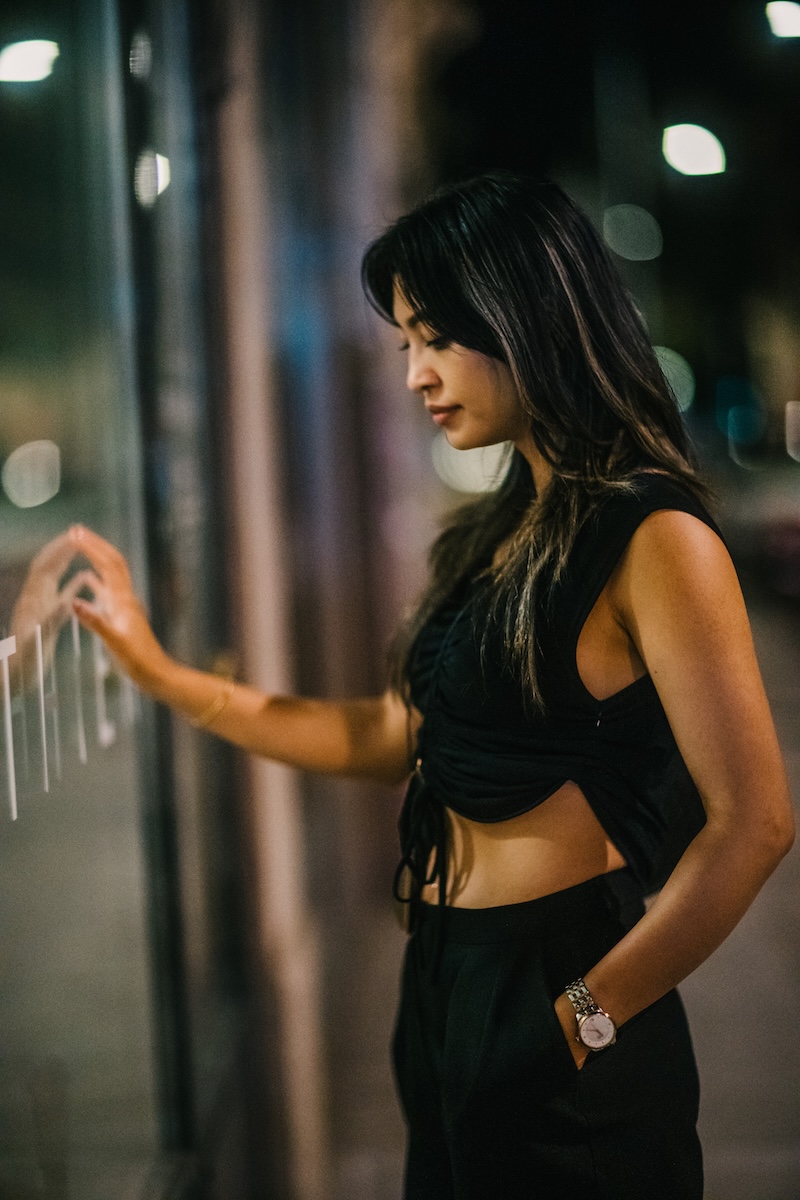
No Posing, Just Existing
Night sessions can feel intimidating for clients: standing on a quiet Geneva sidewalk with a large lens focused on you can easily trigger self-consciousness. This is where the "No Posing" methodology becomes vital.
Rather than dictating artificial poses, I invited her to interact organically with the environment: leaning lightly against the building, looking into the luthier window, or simply enjoying the quiet ambiance of the evening. Within five minutes, the initial nervous tension vanished completely. The camera became invisible, allowing authentic expressions and natural body language to surface naturally.
Follow My Journey
Let's stay in touch — I'll share stories from my latest shoots, technical breakdowns, and upcoming projects across Switzerland. As a subscriber, you'll get early access to special offers and exclusive journal articles.